
Never Pay With Cash, Zelle, or PayPal Friends & Family — Here's Why It Will Cost You |
Metro Detroit vendors are losing booth fees to event scams because of one mistake — the wrong payment method. Learn which payment methods protect you and which ones leave you with no way to get your money back. |
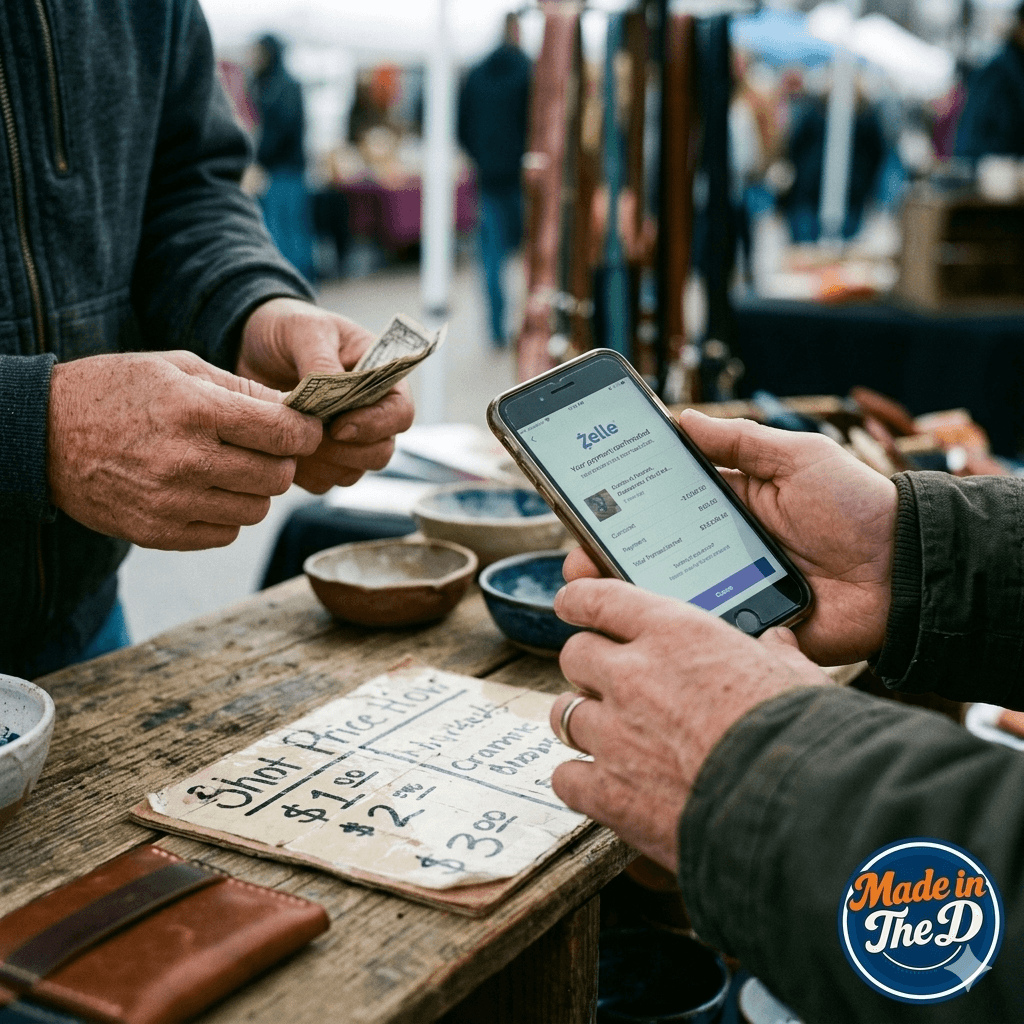
You did everything right.
You found the event on Facebook. You checked the organizer's page. It looked legitimate — photos from past shows, decent follower count, a flyer that didn't look like it was made in five minutes. You messaged them, got a response, and it all felt real enough.
Then they told you how to pay.
Cash only. Or Zelle. Or PayPal Friends & Family.
And that's the moment everything changes — because the payment method isn't just a logistics detail. It's the moment the scam either works or doesn't. It's the moment you either keep your money or lose it forever. Everything before this moment was just the setup.
Your Payment Method Is Your Last Line of Defense
We've talked about vetting the organizer. We've talked about checking references. Those steps matter, and they will catch most scams before you ever get to this point. But scammers are getting better at faking legitimacy. Some of them have real-looking pages, fake testimonials, and enough of a digital footprint to pass a quick check.
The payment method is where the mask comes off.
A legitimate event organizer — someone running a real show with real vendors and real accountability — has no reason to avoid payment methods that protect both parties. Credit cards, PayPal Goods & Services, Square invoices, Eventbrite — these tools exist precisely because they create a formal transaction record. They give both sides documentation. They give the buyer a dispute path if something goes wrong.
A scammer cannot operate inside that system. The dispute process is exactly what they are trying to avoid. So they steer you toward the methods that have no dispute process at all.
Cash is untraceable and unrecoverable the moment it leaves your hand. Zelle is designed for instant transfers between people who already trust each other — there is no fraud protection, no dispute option, and no way to reverse a completed transaction. Cash App and Venmo operate the same way. PayPal Friends & Family specifically bypasses the buyer protection that PayPal Goods & Services provides — it's designed for splitting dinner with a friend, not for business transactions, and PayPal will tell you exactly that if you ever try to dispute a Friends & Family payment.
These are not oversights in the system. This is how the system was designed. And scammers know it.
Why Detroit Vendor Scams Always Involve the Same Payment Methods
Every vendor scam story that circulates through the Metro Detroit maker community involves one of these payment methods. Every single one. You will not find a story where a vendor lost their booth fee through a credit card dispute or a Square invoice. It doesn't happen — because those methods have built-in protection.
The scammer chooses the payment method deliberately. They choose the weapon before you even show up. By the time you're sending that Zelle payment, you have already lost — you just don't know it yet. This is not a technicality. This is the entire mechanism of the scam.
The Safe Payment Methods Every Vendor Should Use
Never pay booth fees with cash, Zelle, Cash App, Venmo, or PayPal Friends & Family.
Always pay through a method that gives you a formal transaction record and a dispute path. A credit card is the strongest option — your bank can initiate a chargeback if the event is fraudulent or never happens. PayPal Goods & Services, Square invoices, and ticketing platforms like Eventbrite all create documentation and give you somewhere to go if things fall apart.
If an organizer insists on cash only, or asks for Zelle and refuses any other option, that is a serious red flag. Walk away. Not because every organizer who prefers cash is running a scam — but because a legitimate organizer running a legitimate show has absolutely no reason to refuse protected payment methods. The only reason to insist on unprotected payment is if they are planning to take your money without delivering what they promised.
There are no exceptions to this rule worth making.
How to Protect Your Booth Fee Before You Lose It
After the money is gone, there is no path back. No dispute process. No recourse. No phone number to call. The Detroit maker community is tight-knit and word travels fast — but community accountability doesn't get your $300 booth fee returned.
The protection has to happen before you send a single dollar. Next week we get into Tip 4 — and it's one of the simplest, fastest checks you can do before committing to any event: Call the Venue Directly. You'd be surprised how many scams fall apart the moment you make that one phone call.
Frequently Asked Questions
Is it ever okay to pay a booth fee with cash?
In very rare cases — a well-established recurring market you have attended before, where you know the organizer personally and have a documented history together — cash may be acceptable. For any new event or organizer you have not worked with before, cash is never the right choice. You have no recourse if something goes wrong.
What's the difference between PayPal Friends & Family and PayPal Goods & Services?
PayPal Goods & Services includes buyer protection. If the event is fraudulent or the organizer disappears, you have a formal dispute path through PayPal. PayPal Friends & Family has no buyer protection at all — it is designed for personal transactions between people who trust each other completely. When an organizer specifically asks for Friends & Family, they are asking you to waive your right to dispute the charge. That is a red flag.
What if the organizer says they charge extra fees for credit card payments?
Some legitimate organizers do pass on processing fees — typically 2 to 3 percent. That is a reasonable business practice. Pay the fee. A $6 surcharge on a $200 booth fee is a small price for the ability to dispute the transaction if the event turns out to be fraudulent. Never let a small processing fee push you into an unprotected payment method.
I already paid with Zelle and now I think I've been scammed. What can I do?
Contact your bank immediately and report the transaction as fraudulent. In most cases Zelle transfers cannot be reversed, but your bank may be able to flag the account or assist in an investigation. File a report with the FTC at reportfraud.ftc.gov and with your local police department. Post a warning in the Made in the D Facebook Group so other Metro Detroit vendors can avoid the same organizer.
How do I know if a Square invoice or Eventbrite listing is legitimate?
A Square invoice will come from a verified Square account and include a formal payment link. Eventbrite listings are publicly searchable — you can verify the event exists on the platform independently. Neither method guarantees a legitimate event, but both create a transaction record and give you a dispute path. Always cross-reference the payment method with the other vetting steps covered earlier in this series.
What payment method do you recommend most for booth fees?
A credit card through a formal invoice or ticketing platform is the strongest option. It gives you two layers of protection — the platform's own dispute process and your credit card company's chargeback process. If a credit card is not an option, PayPal Goods & Services is the next best choice.
This is Tip 3 of the 10-part Don't Get Burned series by Made in the D. New tips publish every week at newsletter.madeinthed.com. |
0 Comments
Join the conversation
Be the first to comment
Share your thoughts above.